Thursday, April 4, 2019

Good for The Body, It's Good For The Soul

Mott The Hoople’s Magnificent Return
(Bill Glahn)

“Hope I die before I get old” (Pete Townshend, The Who)

“No, you're never too old to rock 'n' roll
If you're too young to die” (Ian Anderson, Jethro Tull)

“Once you're gone
You can never come back” (Neil Young)

“Behind these shades, the visions fade, as I learn a thing or two
Oh but if I had my time again you all know just what I'd do” (Ian Hunter, Mott The Hoople)

It’s hard to believe that anyone ever took the first of those song lyrics as anything other than youthful hyperbole or overstatement. Sadly, some did. Even more sadly, some never got the choice. For the rest of us aging music fans that have been more fortunate, sometimes despite our worst flirtations with self-destruction, it’s that last lyric that retains the most meaning.  But there’s more to this story than that.

Mott The Hoople has embarked on their first tour of the United States in 45 years. Officially dubbed “Mott The Hoople ’74,” the line-up consists of the 3 living members of the band that infiltrated Broadway (The Uris Theatre) on their final U.S. tour, making no concessions in the process. That riotous affair is well documented on their Live album, with an even better documentation coming later on the 30th Anniversary edition of that record. This time around, the band would be supplemented with Ian Hunter’s Rant Band, a superbly talented group that has been backing Hunter for well over a decade. But what can be expected of a band that is fronted by an octogenarian (I’m not going to split hairs here), a septuagenarian, and another soon-to-be septuagenarian?

Ian Hunter is 4 years younger than Elvis would have been. He’s older than Bob Dylan. He’s had major hits as a solo artist, including the massively popular “Cleveland Rocks.” Simply put, he’s the spiritual link between rock ‘n’ roll and rock music. And he’s made some of the best music of his career in the last decade with little fanfare.

Ariel Bender (Luther Grosvenor) cut his teeth in Spooky Tooth before joining Mott The Hoople. He closed out his career as a “rock star” a few years later in the under-appreciated Widowmaker. High profile sightings since then have been scarce. Occasionally he pops up on some albums by British Blues artists such as Peter Green.

Morgan Fisher has had a more illustrious post-MTH career, even as the least recognizable name of the three. He’s been a member of Queen’s touring band. He’s produced records by the Dead Kennedys, Jayne County, and Cherry Vanilla. He’s worked with artists as diverse as Robert Wyatt, Yoko Ono, and Jah Wobble to name but a few. He was the last of the three to leave the band, soldiering on with the truncated moniker Mott. But you’re more likely to find his name in the credits than on the marquee.

I caught the current tour on its 2nd night – a packed house at Minneapolis’ fabled club, 1st Ave. The opening act was The Suburbs, a hometown act that has received some acclaim nationally and hero status in Minneapolis. They didn’t fail to disappoint, delivering a short, though high-energy set. The Minneapolis music scene has always been one noted for looking more forward than backward. The Suburbs would be a hard act to follow. They’ve been around a long time, but on this card they would still be the young dudes.

Then intermission, that time when smokers gather outside before re-entering for the headliners. Except few were willing to give up their spots in the front rows, no matter how serious the addiction. I would have to view Mott from the back near the soundboard – not the greatest visual advantage, but at least the sound would be the best in the room.

Mott The Hoople began their 2019 show the same way they started the 1974 shows, with a short rendering of “American Pie.” When Hunter gets to the line “the day the music died,” he asks “Or did it?” And the band tears into “The Golden Age of Rock ‘n’ Roll.” The subtleties of the lyric are often overlooked. This song is no nostalgia trip. It isn’t “it was the golden age of rock ‘n’ roll” - rather Hunter sings in the present tense.  And he’s always sang in that way whether it be 1974 or 2019. Morgan Fisher pounds the keyboards Jerry Lee Lewis style. Ariel Bender, like a mischievous leprechaun, moves towards center stage for some youthful shenanigans and some heavily amplified guitar. If Hunter’s songwriting provides the spiritual link, Bender and Fisher are the perfect vehicle to provide the aural one. Onward.

What followed for the next 35-40 minutes was a trip into the deep tracks. Some REALLY deep. For those who have followed Mott The Hoople with a high degree of attention from the beginning, it was a rare treat to hear these songs in a live situation. But for a lot of the crowd who had been weaned on classic rock radio, songs like “Alice,” “Rest In Peace,” and the complex tenderness of “I Wish I Was Your Mother” didn’t resonate so well. And just when they seemed to gather the crowd back in with a scorching version of “Sweet Jane,” Mott proceeded to play “Rose,” the non-LP b-side to “Honaloochie Boogie.” Blank stares. No matter. Ariel Bender was in the building.

“Mott The Hoople 1974! …1974!! …1974!!!” he shouted as he crossed the stage, which was being cleared by the members of the support team. Hunter, for the only time in the show, grabbed his famed Thomas Maltese Cross guitar (most likely a replica, the first sold years ago). Only the rhythm section of The Rant Band remained with the featured front three. Could the old geezers do it – blow this crowd away like they did 45 years ago? In spades. “Walkin’ With A Mountain” rocked the building so hard that it could have blown the roof off. If only the roof hadn’t been replaced a few years ago. This is the band everyone came to see. From then on, there was no turning back. And like the invasion of the “sanctity of Broadway,” no concessions were made. No key changes for aging singers. In fact, Hunter’s voice seemed to grow in strength with every note. Ariel Bender worked the stage hard and the amplifiers harder. When The Rant Band came back to the stage, nothing changed. By the end of “All The Way From Memphis,” Morgan Fisher was blowing on his fingers. Hunter’s scathing rebuke of predatory Capitalism, “Marionette” was never more appropriate than in times like these. And for the rest of the show, MTH ’74 had the crowd. They left the stage almost void of sweat and big on smiles, returning for a 2-song encore of their most famous song (“All The Young Dudes”) and the late-period single, “Saturday Gigs.” What a show!

.But as I said at the beginning of this ramble of a review… There’s more to this story. Sure – it put some spring back into these old legs, as I’m sure it did for many. But there was something more than feeling invigorated. The final line of “I Wish I Was Your Mother”… And then who knows / I might have felt a family for a while. Morgan Fisher is shooting home movies of this tour just as he did in 1974. In one of the better uses of social media, you can keep up on Fisher’s Facebook page. It should become immediately apparent that this tour is just as much about family connections as it is about finding new vitality in old bodies.

In between the Suburbs’ set and Mott The Hoople’s, I stepped outside to feed the nicotine dragon and ran into the manager of one of Minneapolis’ trending young bands, The Carnegies. Barely legal to be in a club serving adult beverages, Jacob Harmsen was clutching a couple of records (vinyl!) that predated his birth by a good 2+ decades. He was eager to get back inside to try to work his way to the front of the stage to see his musical heroes close up. And maybe, just maybe, get his records autographed at the end of the show. I recognized that youngster. It was me many, many years ago. And I’m willing to bet he made it. No matter what form it may take, rock 'n' roll is in good hands these days. It's good for the body, it's good for the soul. And the future looks just a little more optimistic today than it did yesterday.

Bonus views:

Friday, January 4, 2019

Black Dog in the Land of the Ice & Snow

[Most of my energy these days is focused on Travels With Sally, more of a cultural review than a travelogue. I’m finding that, in some cases, those travels include stories that don’t quite fit the narrative of the book-in-progress, but are nonetheless worth writing about. This is one such story. (Bill Glahn)]

I made a mix CD of “Sally” songs and “Dog” songs for Sally a few years back. Little Richard’s “Long Tall Sally.” “Sally G” by Paul McCartney. 3 versions of “Sneakin’ Sally Through The Alley” (Lee Dorsey, Allen Toussaint, Robert Palmer). Humble Pie’s “Big Black Dog.” Led Zeppelin’s “Black Dog.” And of course, among others, Patti Page’s “How Much Is That Doggie In The Window.” She seems to like them all - at least she doesn’t leave the room when they’re playing. Most of all, she likes the ones with her name in them. For those, Sally moves closer to the speakers. Sally is very self-aware.

On a trip through the heartland this past Fall, things were cut a little short due to foul weather and mechanical problems with Rocinante Jr’s power plant – a 2001 Ford F-150 extended cab pickup. For the uninitiated, Rocinante Jr. is a tiny cabin on wheels – home away from home when we are traveling the country. After a few weeks of home-stay, Sally was itching to hit the road again by late October. So was I. This would be a short trip, though, a 2-day quickie up to Minneapolis to see Zeppo film a live promotional film.

“Do you want to see Zeppo play ‘Black Dog?’” Sally raised no objections. With our chariot still on the blink, this time it would be in the more comfortable (and dependable) confines of the Chevy and a hotel. Onward to the land of the ice & snow.

I’ve known Zeppo guitarist and lead vocalist John Eller for almost half my life. We met sometime at the end of the ‘80s at a record convention in St. Paul (The old Kelly Inn show). But the first time I really took notice of his singing talents was at the annual Philadelphia Record Convention – a huge affair held every Thanksgiving weekend at the Valley Forge Convention Center. As was the tradition, when a lot of record dealers and music fans from around the globe met up, there were always some late night eats, drinks, and catching up to do. On this particular night we ended up at a dining facility that also served as a karaoke bar. A few vendors, seasoned veterans of defunct bands who found better economic rewards in selling music rather than playing it, signed up to sing. This would be a much better than average night of karaoke singing. With some encouragement, Eller scanned the play list and picked out an Aerosmith song. Then proceeded to slay everyone in the joint. Not even the host singer wanted to follow THAT act.

Eller, who had already had regional success in the Minneapolis area with Paradox, a glam metal outfit that included some originals mixed with covers in their live act, would release his first CD of original tunes the following year with his band, The DTs.

Eller’s musical path has taken a lot of tangents since then (Eller-Lynch, Retrofit, The Shiny Lights, Shabby Road Orchestra, countless studio sessions). But the origins of Zeppo lie in a basement jam session in 2016 – the kind of thing musicians who have love and respect for each other do for fun. It was there that Eller, drummer Noah Levy (Brian Setzer Orchestra), guitarist Terrance J. Fisher (Run Westy Run), and bass-player-about-town Paul Boblett (Fathom Lane, Faith Boblett, and King James Version) discovered that they all had a mutual love of Led Zeppelin. With prior commitments, the idea of forming a Zeppelin cover band would be put on hold for a couple of years. When Brian Setzer decided to pursue a 40th anniversary Stray Cats reunion tour and album, that freed up the globe-trotting schedule of Levy. Done deal. Almost. The band would add Zach Sershon,  a classically trained keyboard player and the organ player for The Minnesota Timberwolves, to add the final touches on those epic Zeppelin tunes like “No Quarter” and “Kashmir.”

But this would be no Branson-style stage show. Zeppo’s motto would be “no wigs, no bullshit.” The band’s approach would be to explore and expand (in some cases) on the nuances and subtleties of those well-known Zeppelin grooves. And to rely solely on their musical and vocal talents to get the job done.

Sally and I made the trip overnight, checking into the hotel on the afternoon of the show. It was the longest I’d driven in one stretch in years. Of course, we took a few stops to pee and stretch our legs, extending a 7-hour drive into 9 hours. Sally endured without ill effects, but my legs were cramping up. We took a nap before heading out. Sally did her job as a service dog, supported me as I struggled to maintain balance and walked me around the parking lot a few times to get my “legs” back. Sally’s job was done for the day, but I wasn’t sure if the staff at A440 Studios would allow her in the building without her service cape. Sally, a veteran of music venues, can usually go into places in “off-duty" gear where she is known. This time I dressed her up and we headed out.

I’ve been in some nontraditional studios in the past – but A440 Studios was something new to me. Located in an industrial park, A440 Studios not only included the latest in recording technology, but also a concert stage (including a dry-ice machine), an elaborate lighting system, filming gear, enough space in front of the stage to accommodate over 100 guests. AND a knowledgeable staff sufficient to coordinate all of it. Off to the side was a Bohemian-style “lounge” area that included a couch and comfortable chairs.
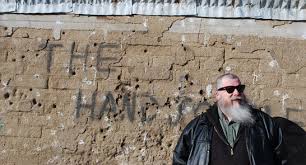
(L-R: Sally Bill Glahn, John Eller)

Sally and I greeted John outside in the parking lot, caught up a little on things, took a few photos, and proceeded into the building. Studio manager Steve Kahn would not only welcome us, but ask permission to pet Sally (usually a no-no for service dogs on duty). OK! Steve Kahn is a dog person. Permission granted. This was a welcome sign and a signal to Sally that she could proceed in a more relaxed atmosphere. Sally did her thing as the crowd began to trickle in - working the room like the ambassador of good will that she is. I met up with some friends that I hadn’t seen in far too long, sought out Facebook friends that I have never met in person, and made some new friends in the process.

Then Zeppo took the stage. “Misty Mountain Hop.” The joint was rockin’!

But how would Zeppo measure up compared to the live Zeppelin experience? As editor of the defunct Live! Music Review magazine, I wrote the Z-files monthly bootleg column for 7 years. I’m overly familiar with the excitement and the pitfalls of that legendary band in concert. The phrase “tight but loose,” has often been applied to Zeppelin by fans. But all too often (especially in the middle years), that would translate to “far too loose, self-indulgent, sloppy and boring.” Any semblance of “tight” would come late in the band’s touring history – the 1980 final tour where the set list was trimmed from 4 hours to 2, and onward to the Page/Plant tours where a similar approach was used.

With two excellent guitarists on stage, Zeppo would follow a template laid out on the Zeppelin studio albums – tight arrangements, exemplary guitar interplay, not a bad vocal performance in sight (Plant was notorious for experiencing throat problems on any given night), and a rhythm section that kicks ass. Sershon was a much welcome addition, resorting to some variations on the keyboard parts without overextending them. But don’t get the idea that Zeppo performed carbon copy performances of Zeppelin records. To ears tuned into those records for decades, the differences come in subtle places and add, rather than detract, from the performances. That’s what musicians of this caliber do.

Sally’s highlight? It was hearing her name mentioned in the intro to “Black Dog.”

A needed night of sleep for Sally and myself followed, before a morning breakfast (NOT at the crack of dawn) at the Bandbox CafĂ© with John & friends, including John’s canine companion, Shilo. Then off to the old Eller homestead, occupied currently by pal Dave Biljan. Sleepy-eyed Dave had a no-miss work commitment the night before and missed out on all the fun. We kept him from his own much-needed sleep for a few hours, but he was a trooper. Oh the joys of being retired.

See Zeppo's promotional clip here: Zeppo live

Saturday, December 29, 2018

2018 In Music: Short Reviews (part 3)

Various Artists: The Beginning of the End – The Existential Psychodrama in Country Music (1956-72)
There is no period in country music that resonates today as much as it did in 1956-1972. But you’d have to dig beyond just the hits - into the b-sides and deep album cuts to get to the real meat. These were the “glory days” of day-to-day living in the United States. There were great advances toward a legitimate middle class, with movement toward racial equality, unionism, and anti-war sentiment. But in reality, the ruling class never really took their boots off the necks off the working class. The "war on poverty" would be the least successful of the progressive movement.

The myth went that even the unskilled and uneducated had access to great paying union jobs, a stable family environment, an education, and the latest greatest Chevy V-8 in the driveway. There was rock ‘n’ roll on the radio. Happy days were here again.  Peace & love would triumph over war, hot and cold. But despite the historical summary, this never applied to the poor. And the ruling class has been working ever since to roll back the clock - to the 19th Century.

On Record Day this year, the folks at The Omni Recording Corporation (Iron Mountain Analogue Research Facility) released a 16-track version of this title on vinyl. That it would be an Australian outfit to release such a collection should surprise no one. While major American entertainment companies focus on perpetuating the myth (i.e. Garth Brooks TV concert specials), it often seems that for a deeper understanding of classic American music, one must often look overseas. Tracking down master tapes of such recordings, years of research, and a 21st Century re-mastering comes from a labor of love, not a love of money.

With only 500 copies of the vinyl pressed, there was a need to hear more – thus a much welcome expanded version (30 tracks) on CD. The extra 14 tracks add to, not detract from, the original concept.

So how were the working (lower) class faring in those years? Well, it seems they weren’t faring too well, subjected to the same worldly fears, financial woes, and personal angst that we experience today. The song from which this album takes its name, Jimmy Griggs’ “The Beginning of the End,” captures that in it’s opening line. “People say they believe in love/ But the hate goes on.” And what rings more true today than David Price’s “National Everybody Hate Me Week,” especially in the battle grounds of social media? Mell Tillis’ “Survival of the Fittest?” It’s an early exploration into environmental concerns. And a questioning of faith.

Opening and closing with two different versions of “Searching” The Beginning of the End shows exactly how much thought went into this project. As long as we search (and act) victory for the ruling class is not a guarantee.
Rating: A (best compilation of 2018)


Frank Turner: Be More Kind
Just as I was about to give up on Frank Turner, he’s emerged from his rabbit hole with an album jam packed with sharp political criticism – absent from more recent releases. Not that Turner has become a revolutionary British street fighting man or anything like one. But there is something alluring about the simplicity of “Be More Kind,” especially when mixed among songs like the biting “Make America Great Again.” Or the historical significance of “1933” where he sings “Be suspicious of simple answers.” It seems a lot of songwriters channeled aspects of The Kinks’ Preservation this year. 2018 was, indeed, a scary year on the planet. “Be More Kind” is the simple answer, but as Turner establishes throughout this album, it’s only part of the mix. Comeback album of the year.
Rating: A-

TumbleTown: Never Too Late
This prog-opera might have you running to your record collection for the safety of Evita, Jesus Christ Superstar, or any other schlock ‘70s musical of your choosing. Occasionally there is some Brian May influenced guitar. But weighted with this much pomposity, the overall results have the unwanted effect of high anxiety. Lyrically, TumbleTown struggle with the same second language problems as their Dutch compatriots, Golden Earring. But where “Vanilla Queen” rocked mightily, Never Too Late just slogs along.
Rating: D

Reef: Revelation
In the mid-90s Reef landed high in the UK charts with “Place Your Hands,” a rhythmically fresh feel-good tune that challenged the then waning sound of Grunge. MTV picked up the video in the States – a promising start for a career that went nowhere. Two more albums followed with little success. Now, after eighteen years of silence, Reef return with an album that starts off with a track that will leave listeners thunderstruck. With gravel-voiced Gary Stringer doing his best Bon Scott imitation, the band plows through the title track like a rock ‘n’ roll bulldozer, hell-bent on destroying any illusions that this is going to be a return to form. Unfortunately, they spend the rest of the album trying to convince the audience that they were only kidding. Reef are not the next AC/DC. They are not even the next Rose Tattoo or Rhino Bucket. What follows is a meandering of styles that roughly mirror their past – some catchy tunes with evangelical overtones. But there are far more duds than you would expect from a band that had almost two decades to think about it. With a quarter of the tunes being covers, things reach a low point with ”Darlin’ Be Home Soon,” patterned after the Joe Cocker version, but with none of Cocker’s finesse.
Rating: C (a full notch up from what it deserves, but that title track is a doozy)


[All reviews by Bill Glahn]

Tuesday, December 25, 2018

2018 In Music: Short Reviews (part 2)

JCM (Jon Hiseman, Clem Clempson, & Mark Clarke): Heroes
Reuniting 3 alumni of British hard rock/progressive band, Colosseum, JCM stick to what they know best, but in a power trio format. The members have ventured far and wide since those days. Clem Clemson is most recognized in the States as a member of the ultra heavy Humble Pie from the Smokin’ period onward. Before bassist Mark Clarke formed a second edition of Colosseum with Jon Hiseman, he did stints with Tempest (a jazz rock outfit that also included Hiseman), Mountain, and Rainbow. He received his highest degree of radio exposure as a member of Billy Squire’s band in their glory years. Drummer Hiseman continues to be best known for his work in Colosseum and the United Jazz & Rock Ensemble. Although the latter band received significant exposure (14 album releases) in Europe, that never translated to much of an American audience.

JCM continues to create the kind of music their core audience expects- a hard mix of rock, jazz, and blues. Clarke handles the vocals more than adequately, often influenced by the blues renderings of Jack Bruce (Cream’s strongest vocalist). JCM is a collective of musician’s musicians, and Heroes does nothing to change that perception. For American listeners, the closest comparable is West, Bruce & Laing with jazz overtones. It’s great music derivative of the early ‘70s, but it might leave modern audiences wondering “where’s the funk?”
(Rating: B)

Bruce Springsteen: Springsteen On Broadway soundtrack
A soundtrack sorely in need of the visuals. Although the Netflix movie (I’ve finally seen it) was worthy of all the accolades, as a 2 1/2 hour soundtrack album, this simply doesn’t work. Folks do not listen to music the way they watch film and I’m no exception. Once you’ve heard (and seen) the stories, you’ll find yourself programming past the extended storytelling the next time around. And like with any exceptional movie, you’ll dial it up on Netflix a number of times when you’re ready to plant your ass in a seat for another look. A single disc version, please.
(Rating: C+)


Daddy: Let’s Do This
The latest offering from the rocking side of Nashville, Let's Do This doesn’t so much tone down the social narrative as it does move it between the lines. The ongoing side project of Will Kimbrough and Tommy Womack, Daddy rocks more on this outing – closer to Rolling Stones guitar interplay than the more roots renderings of Muddy Waters and Chuck Berry (a Daddy staple) – Kimbrough reestablishes throughout why he is one of the most sought after session musicians in Nashville. Womack reestablishes why he one of the regions finest songwriters. And fans finally get a finished version of “When Disney Takes Jerusalem,” a song that has been occupying space as a demo on Womack’s website for a couple of decades. Womack, who received his second diagnosis of cancer in as many years, seems anxious to finish of some lingering projects. This is a fantastic one, with hopes for many more.
Rating: A-

DeWolff: Thrust
This Dutch retro metal (‘80s edition) has received numerous accolades around the blogosphere. It just goes to show that living in the past is nowhere to live - especially if it's a flawed version of the past. At best (“Tombstone Child”) this is entertaining. But mostly a higher rating is just wishful thinking. Judas Priest got it right the first time around. This doesn’t.
Rating: D

Walter Wolfman Washington: My Future Is My Past
Washington carves his way through this collection of New Orleans soul like a spoon through hot butter. There is a kinship between My Future Is My Past and late-‘60s Isaac Hayes (Hot Buttered Soul) that frequents this record. Maybe the finest blend of deep southern soul and blues to emerge this year, My Future Is My Past, doesn’t exactly dwell on the past – rather it builds on it. The duet with Irma Thomas, “Even Now,” is pure salivation.
Rating: A


Kieran Kane & Rayna Gellert: The Ledges
A more front porch-sounding record than anything by Gillian Welch if you can imagine that. That’s a plus for fans of Welch who enjoy her vocal duets with David Rawlings in concert. This is truly a duet album. -  no more so than on “I Wanna See Something New.” Take advantage.
Rating: A-


[All reviews by Bill Glahn]

Tracks:


Tuesday, December 18, 2018

2018 In Music: Short Reviews (part 1)

Pseudo Mind Hive: From Elsewhere
If your passion is for guitar/organ driven hard rock circa early-70s, this may be for you. A retro outfit from Melbourne, Australia PMH capture that sound with a fair degree of success. But lacking the extraordinary skills of Deep Purple or the drama of Uriah Heep’s Demons & Wizards album, they ultimately fall short. Still, if you’ve grown tired of the familiarity of “Highway Star” and “Easy Livin’” this may provide some welcome relief. But only for about 40 minutes and then you’ll be missin’ those old faves. Rating: C

Holly Golightly: Do The Get Along
After a three-year hiatus, Holly Golightly returns with a full band, a batch of new originals and 3 well-chosen cover tunes. British by birth, Golightly (actual name), is best known for lo-fi recordings with an Americana flair. While Do The Get Along receives a more produced approach than much of her previous work, it never strays far from the main dialogue. It’s the R&B tunes that produce the most pleasurable moments. “Do The Get Along” and “I’m Your Loss” take listener to the smokiest of night clubs. Ruth Brown’s "I Don’t Know" keeps you there. Rating: B+

Dave Davies: Decade
A collection of Davies’ unreleased tracks from the ‘70s, Decade is a welcome addition for any Kinks aficionado. The strength of the song writing should come as no surprise to anyone familiar with The Kinks catalog. With brother Ray doing the lion’s share of the writing for the band, Dave Davies contributed such tunes as “Death of a Clown,” “Strangers,” and “Living On A Thin Line” – among The Kinks’ best tunes. That level of songwriting, for the most part, did not transfer to Dave’s solo albums, a mishmash of hit and miss. The big surprise here is that there is no such inconsistency. The even bigger surprise is that, despite the albums rather long recording span, it sounds like – not a collection of Kinks’ rejected songs – but, rather (Faces fans take note) a long lost Ronnie Lane album. Rating: A-

Tony Joe White: Bad Mouthin’
The old swamper travels upriver to hill country on this, the final studio album before his passing. It’s a humdinger and not quite what you might expect from someone with as long and illustrious of a career. Still treading new waters. Rating: A-

Uncle Acid & The Deadbeats: Wasteland
A doom & gloom concept piece from the land of Brexit, Wasteland plays on the retro sound of Black Sabbath, but with a soundscape so compressed that it doesn’t sound any better on a full blown rack system than it does on a smart phone. A sonic disaster that is impossible to translate. Head back to 2011 for the band’s breakthrough album, Blood Lust instead. Or forget about them altogether unless, of course, you’re a guitar obsessive. Rating: D

Brandi Carlile: By The Way, I Forgive You
The absolute best album from the first half of 2018, enough words have been written about this album already. But if it somehow slipped by your ears, you need to check backwards. Your welcome.
Grade: A

Kevin Gordon: Tilt & Shine
The best known unknown to occupy a spot in the wide-ranging Americana genre, it simply befuddles me that Gordon didn’t move into widespread fame after his stunning 2012 album, Gloryland. Songwriting and storytelling are his forte, and there is nothing here that will disappoint. Nashville is his base but you’d have to move further south for his oeuvre. Southern Gothic is his domain. Think of a more progressive Harper Lee set to music.
Grade: A-


[all reviews by Bill Glahn]

Thursday, December 13, 2018

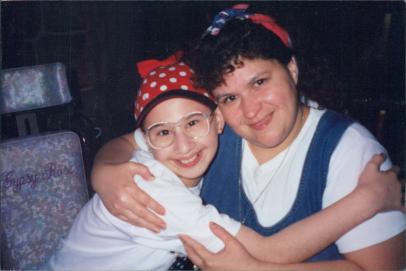
Gypsy Rose Blanchard - A Look Backward at a "Killer"

[There has always been something about the Blanchard murder case in Springfield, MO that haunted me. The pictures of Gypsy Blanchard, as did the name, seemed way too familiar. My fractured memory finally connected the dots this morning. I wrote this piece back in 2006 for the Holler If You Hear Me blog - long before Gypsy Rose Blanchard and her boyfriend, Nicholas Godejohn, conspired successfully to kill Gypsy's mother. Do I feel "punked?" Quite the contrary. Maybe by Dee Dee Blanchard, but certainly not by Gypsy Rose. It'll be one of the better accomplishments I'll take to my grave - helping bring a moment of joy to a little girl who has moved from one jail to another.]


Gate 9
(by Bill Glahn)
I needed a little extra cash so I signed on with the Ozarks Empire Fair as a ticket taker for the 10-day duration from July 28 to August 6. The car payment was overdue. So were the phone and Internet service payments. The $5.35/hr pay sucked, but there was an opportunity to put in a lot of hours in a short period of time. On my first day at work. they took one look at me and reassigned me to Gate 9. They explained that it was a parking lot job, but that they would still pay me the $5.35 rate instead of a drop to $5.15. Thanks.

Instead of handing me a little red flag to wave cars into open spaces, they handed me a walkie-talkie programmed to Channel 3. Channel 3 is the security channel. “Don’t let any traffic proceed down Smith Street past the Gate 9 entry,” I was told. Gate 9 is the entry to the west parking lot, by far the biggest at the fair. Smith Street is designated one-way during the fair. At Gate 9 a wooden barricade blocked the northernmost lane of Smith. An orange barrel, the other. I was to move the orange barrel only for fair operational people, emergency vehicles, and the crew and performers for the grandstand shows. In short, I was the last line of defense against traffic that wanted to continue down Smith to Grant Ave, a main artery. Or the fans who wanted to get to the backstage area at Gate 10, just 100 yards down the road. Or the farmers who wanted to take a short cut to Gate 7, which lay beyond Gate 10 close to Grant. All these people I had to direct through the west parking lot and instruct them that they would have to head south through the parking lot, exit, and then make 2 or 3 left hand turns to get to the place they wanted to go. That place was clearly visible a couple of football fields downhill on Smith from Gate 9. Not many wanted to hear that, from Gate 9 onward, Smith was closed to traffic by order of the Springfield City Council.

Gate 9 has history. “Last year, the Gate 9 attendant walked off the job on his first day,” Ellen, one of the supervisors in security told me. “He said he wasn’t getting paid enough to take so much abuse. I had to finish his shift and find somebody else.” Of course, she told me this four or five days into my employment, and by that time I already knew as much. On day two this year, a taxi zoomed through the barricade during the morning shift and sent the orange barrel airborne, hitting the golf cart of one of the supes riding to the gate to explain why he couldn’t go through. The morning shift attendant had little desire to stay after the incident.

My shift started at 3 p.m. each day and ran through 11 p.m. During one of the year’s worst heat waves, Gate 9 offered no shelter from the elements. By the time I reported to work each day, the asphalt was melting. A pair on sandals ruined by day 2; a pair of sneakers by day 4. And the tempers of the people in the cars were already frazzled by the time they got to Gate 9. I couldn’t blame them. I couldn’t let them through either. I needed the paycheck. So, no matter how much abuse was hurled my way, I remained polite.

“No, ma’am, I can’t move the barrel for you. You have to exit through the parking lot and take Norton to Grant.”

“No sir, there are no exceptions.”

“Yes sir, I realize your hogs are just down the road inside Gate 7. City Council has designated this stretch of road for emergency and operational use only.”

Sometimes, expletives were hurled at me in response. Tires screeched as frustrated drivers stomped on the gas as they entered the parking lot. A couple of farmers threatened to kick my ass if I didn’t move the barricade.

“No, sir. I can’t do that. I need this job.” Neither followed up. Sometimes there is an advantage to being physically intimidating. Even when you don’t mean to be.

I lost my composure only once.

It was on Sunday July 30, day three on the job. At about 6 p.m., a new Cadillac DTS pulled up to the barrier. I approached the driver’s side window.

A cool blast of AC hit me as the driver rolled down his window. He seemed to be in his late 60s or early 70s. A woman of similar age sat in the passenger seat. Both wore scowls that seemed permanently fixed. They were obviously well-off, dressed in conservative finery. Neither seemed as though they had allowed themselves the discomfort of exiting their air-conditioned domain for any time longer than it took them to go from their house to their car.

“I don’t want to go to the fair. Move the barricade,” the man barked at me in a manner that indicated he was used to getting his way.

“I’m sorry, sir. Smith Street is closed to all traffic from this point onward. You’ll have to proceed through the parking lot to Norton and exit there.”

“I am going down to Grant. Move the barrel.”

“I can’t do that, sir. Please proceed through the parking lot.”

The guy looked at my name badge and took note. “I know many important people in this city. I can have your job. This isn’t a request. I said move the barrel.”

I gave him the city ordinance spiel. He reiterated what an important a member of the business community he was. I would “have to make an exception."

By now I was ticked off. “Well, sir, if any of your important buddies are on city council, take it up with them. But if you want that barrel moved, you’ll have to get out and move it yourself. And there will be another barricade further down the road. You’ll have to get out of your air conditioning and move that one too. Do you think you can handle it?”

“Look. If you don’t move the barrel, I will sit here until traffic backs up to the zoo.”

The zoo is about a mile back on Smith; by the early evening rush, traffic was probably backed up to the zoo anyway. So I called his bluff with one of my own. “Then I guess we’ll just have to get a tow truck.” I pressed the button on the walkie-talkie. “Gate 9 to security. We have a car that won’t move and it’s blocking traffic.”

As the guy turned his wheels to pull into the parking lot, his wife leaned over and said, “This makes you not even want to go to the fair.”

“Ma’am – the first thing your husband told me was that you didn’t want to go to the fair. No loss there.”

I returned to being Mr. Polite. But no matter how many cars offered up some bottled water or Pepsis to this beleaguered “ticket taker” (and there were several), there weren’t enough random acts of kindness to make me like this job any better.

Then came Tuesday night.

Miranda Lambert was the headliner. Although I’m unfamiliar with her music, she did a fine version of The Band’s “The Shape I’m In” during her sound check. Come downtown / Have to rumble in the alley. I laughed to myself. Out of nine lives, I spent seven / Now, how in the world do you get to Heaven / Oh, you don’t know the shape I’m in. It was perfect dark comedy – this heat was about to burn number eight right out of me.

I had been instructed to let the wife of one of the fair board members through Gate 9 to meet Lambert and view the show from backstage. Rank has its privileges.

She proceeded through to Gate 10 at around 7:30. The show started at 8 p.m.

About 8:10 a ragged-looking car approached the gate. An old Dodge (I think) from the mid-80s. One of the cheap models. Definitely on its last legs. Definitely the car of a person who is struggling. I motioned the car into the parking lot but it stopped. I approached the driver’s window. It was a lady, slightly overweight, not well-dressed.

“I’m late. I got lost. I need to get to Gate 10. They’re waiting for us there.”

“Who is ‘us’?”

“The name on the guest list is Gypsy Rose [I don’t remember the last name]. This is Gypsy Rose and she’s a big fan of Miranda Lambert’s. We’re backstage guests, and Gypsy Rose is supposed to meet her tonight.”

I glanced over at the passenger seat. Gypsy Rose might have been 10 or 11 but her frail body was more that of a 6-year-old. She was dressed in a new t-shirt and new baseball hat, probably the best “duds” her mom could afford. There was no hair protruding out of the cap. She had what looked like a surgical wrap around her neck. She didn’t say anything. She just looked at me with wide hopeful eyes.

I got on the walkie-talkie. “I have Gypsy Rose at Gate 9. She doesn’t have a Gate 10 pass, but she was told to go to Gate 10 for entry.”

The response was what I expected. “Gate 10 is shut down. We’ll check to see if she’s on the guest list and then she’ll have to go to Gate 5A.”

Then word came back that she wasn’t on the Gate 5A list.

I wasn’t going to dash this girl’s dreams. “Bill, can you come down to Gate 9?”

Bill Cantrell was my direct supervisor and I had grown to know him as a genuinely nice guy who had enough years (16) with the Fair to get things done. I told Gypsy Rose and her mom not to worry. Her mom kept apologizing for being late. Gypsy Rose never said anything, and I realized that she couldn’t vocalize. But, damn, she could communicate. And what she kept saying with her eyes was that this was the biggest thing in her life. She was excited and kept bouncing up and down in her seat with anticipation. She wasn’t discouraged. She gave no indication that she had anything but the highest appreciation for life.

I explained the situation to Cantrell. He broke through the red tape – got hold of one of the stage crew and found out that Gypsy Rose was indeed expected and that everyone was worried when she didn’t arrive. While Bill arranged for a customer services vehicle to transport Gypsy Rose and her wheelchair to Gate 10, I chatted her up with questions that didn’t require more than a shaking of her head. Her body language spoke so much more.

“Have you ever seen Miranda Lambert before?” (No)

“Do you like her CD?” (Big shake yes)

“Are you excited?” (Her whole body started bouncing up and down and her hands clapped together as she put special emphasis on her yes nod.)

The customer services guy lifted her onto the cart and as she sped toward Gate 10, I yelled “Have fun!” The smile she flashed back to me was only surpassed by the one she had on her face the next day when she and her mom stopped by to show me pictures. It was a smile that will be embedded in my brain forever.

The rest of the week was a breeze.

Mr. & Mrs. Cadillac DTS are probably still miserable people. But that’s their problem. I’m feeling just fine.

links:
https://en.wikipedia.org/wiki/Murder_of_Dee_Dee_Blanchard
http://hollerif.blogspot.com/2006_08_06_archive.html

Wednesday, December 12, 2018

Untethered: The Sounds of Robert Fisher Transcending


Willard Grant Conspiracy: Untethered (2018)
(review by Bill Glahn)

Most often lumped in as “Americana,” by streaming services and music publications, a lot of Willard Grant Conspiracy’s music echoes from more distant shores. While some “twang” may creep in on occasion, like a refugee from Dave Alvin’s Eleven Eleven album, it’s more helpful to think “Waterlow” from Ian Hunter’s Strings Attached album, the choral arrangements during the last minute of Fairport Convention’s “Meet On The Ledge,” or even the mood of Nick Cave’s The Good Son.

The other problem with defining WGC as Americana, is that Robert Fisher’s themes predate America by a good long stretch. They’re as old as the world. And The Willard Grant Conspiracy often embellish his songs more as a chamber orchestra – one that plays in the court of common folks rather than kings. And how do you pigeon-hole an album like In The Fishtank, a collaboration with Dutch Electronica outfit, Telefunk – with it’s world music drum loops?

Fisher, the vocalist and primary songwriter for WGC describes the band’s sound in more abstract terms: “…if you draw a picture, you draw a geography, you draw a good fictional place in time for something to exist in, it immediately draws a picture in the listener’s head, so when the audience is hearing the song, they’re drawing pictures upstairs. Same with film.”

Cinematic - if it isn’t a music genre, it should be.

The first time I heard a Willard Grant Conspiracy tune was on a sampler CD that came with the British publication, Uncut. The track was “Soft Hand” from their album, Regard The End. Widely regarded as the band’s best song, “Soft Hand” contained the undeniably captivating refrain “there I made you smile, there I made you smile, there I made you smile, made you smile again.” Whether your mind draws a picture on the giving or receiving part of that refrain, the result is the same. It’s a revealing part of Regard The End – an album that is comprised of dark landscapes such as “The Suffering Song,” a tune that channels the most bleak of Leonard Cohen tunes. In Fisher’s mind, however, it’s the simplest of life’s pleasures that win the day. “There I made you smile.” Perfect. I wouldn’t know until years later, while watching a Farrelly Brothers DVD (Stuck On You) that “Soft Hand” had been used in the film.


Willard Grant Conspiracy flew so far under the radar in the United States that keeping up with their releases (and backtracking) has proven difficult. Some are only available as imports and a large number are out of print, even in this era of downloads. On a German TV interview, Fisher said, “I think in the U.S. the kind of music that we do is marginalized by the major labels and because media is not as accessible as it is here (Germany) for an independent label.”

Robert Fisher didn’t fit any major label’s image as a viable “pop star.’ A man of tremendous girth, he would perform at concerts, not prancing around the stage, but confined to a chair. With a band that couldn’t be easily boxed into a single genre, mass popularity wasn’t an option. Neither was abandoning his musical vision. “If I wasn’t here doing it today [in Europe], I’d be sitting in some roadhouse in the [California] desert doing it.” Like many artists that work on the fringe, Fisher supplemented his income with a day job – one that had flexible hours (real estate agent) until health issues intervened. All the while, writing new material.

The lone constant in WGC being Robert Fisher, it seemed that 2013’s Ghost Republic would be the band’s swan-song. Fisher had moved to Brodie, a former mining town in the California desert to write the album before passing away in February 2017.

So… along comes the news of a Willard Grant Conspiracy posthumous album, Untethered. Anything but a pillaging of the vaults, Untethered has been lovingly assembled by Fisher’s long-time collaborator, multi-instrumentalist David Michael Curry from the last recordings Fisher made. It’s a tough listen - sometimes harsh, sometimes beautiful, sometimes challenging.

Untethered opens with “Hideous Beast,” an unexpected curveball. Coming in under 2 minutes, it has more kinship to Ginsberg’s “Howl” than anything in the previous WGC canon. Fisher dispatches the rage he accumulated during a lifetime of hardships. It’s both frightening and necessary to understand the music that follows.


Fisher often wrote about pain and death. “Do No Harm” is one of the albums most beautiful songs and a coda of sorts to “Soft Hand.” More of a final prayer than a command, Fisher parts this world with the simplest of all requests: “Take my orders from the stone… do no harm when I sleep.”


The remainder of Untethered is a mix of instrumentals and reminisces. Addressing the paradoxical nature of humanity, he sings “I want to feed you to monsters/ your goodness will save you” ("Love You Apart"). The final vocal track, “Untethered,” is the only song written between Fisher’s diagnosis and death (a span of only a couple of months). On it, Fisher sings “Dreamed last night I was blown apart and busted/ sidestepped my way into the path of a hurricane/ for the first time in my life I felt untethered.” And then there’s “Trail’s End,” an instrumental that rolls along like the sound of the closing credits of a particularly fine movie. It may be the most cinematic Willard Grant Conspiracy album of them all. (Rating: beyond the ether.)

Bonus tracks:


Referenced tracks: